The Problem Isn't Dinner… It's Everything Before It
Something I wish someone had told me when I was trying to lose weight: the problem usually isn't what you eat at dinner. It's what you didn't eat during the day.
If you've ever made it through a "good" breakfast and lunch… or skipped them entirely, only to find yourself raiding the kitchen at 9pm with seemingly zero self-control, you already know this pattern. And if you're like I was, you probably blamed yourself for it.
Here's what's actually happening.
It's Chemistry, Not Willpower
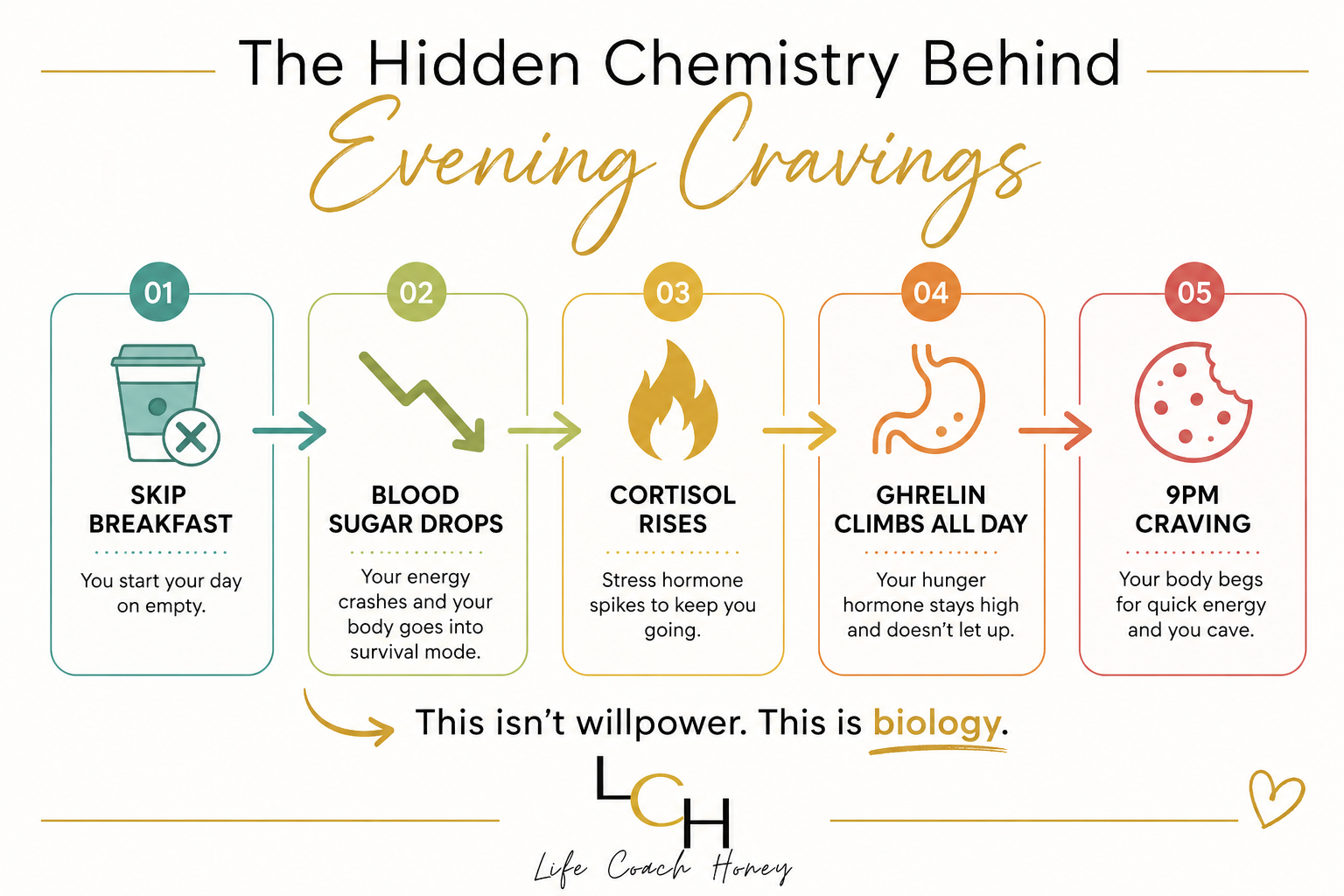
Skipping breakfast (or eating too little during the day) drives cortisol up and blood sugar down. By evening, your body is in full craving mode, not because you're weak, but because your hormones are doing exactly what they're designed to do when they sense this kind of deficit.
Cortisol is your stress hormone. When blood sugar drops too low for too long, cortisol rises to compensate and one of cortisol's jobs feels like it makes you seek out fast energy. That usually means reaching for something high in sugar or refined carbs. At the same time, ghrelin (your hunger hormone) climbs throughout the day if you haven't eaten enough, and by nighttime it's working against you at full strength.
So that 9pm craving isn't a character flaw. It's biochemistry asking to be fed — loudly.
How I Learned This
I lost 60 pounds, and not by following a plan I found online. I lost it by understanding what was actually happening in my own body. I lost it by coaching myself alongside a great personal trainer who gave me the freedom to eat what I want.
Once I started applying everything I’ve learned, with a massive amount of myths busted, everything started making sense. And it worked. And it dare I say it, actually became easy.
The cravings weren't random. The "failures" weren't failures. They were predictable responses to predictable inputs.
Once I understood the mechanism, I could actually work with it instead of fighting it.
What This Means for You
If this sounds familiar, the fix isn't more willpower at 9pm. It's earlier in the day. A few things that make a real difference:
Eat a protein-forward breakfast within an hour or two of waking. This blunts the cortisol response and sets your blood sugar up to stay more stable through the day.
Don't let more than 4-5 hours pass without eating something with protein or fat in it. Long gaps are exactly what trigger the late-day cortisol spike.
Notice the pattern before judging it. If evening cravings are a recurring theme, look at what happened 6-10 hours earlier — that's usually where the real story is.
This is the kind of thing I work through with clients in my nutrition coaching sessions — not generic advice, but understanding your specific patterns and the biology behind them, then building a plan that actually fits your life.
Work With Me
I'm an ISSA-certified nutrition coach with a Master of Science in Chemistry, offering 30-minute online sessions for $20. You'll leave with a personalized plan based on your specific patterns, not a one-size-fits-all template.
Book a session: https://www.calendly.com/lifecoachhoney/nutritioncoaching
Life Coach Honey | Woodsdom LLC
This post is for educational purposes only and does not constitute medical advice. Life Coach Honey is not a licensed dietitian or physician. If you have a medical condition, please consult your healthcare provider before making changes to your diet.